
Operations strategy for industrial companies · Gothenburg
We answer one hard question for your company, in writing, in six weeks.
Kvist is four partners who work for the owners, CEOs and boards of manufacturers and distributors with €50–800 million in revenue, many of them family-owned. You bring the question; we take it apart, test every part of it on your own numbers and give you an answer you can act on.
Since
2014, from an office on Masthuggstorget
Who does the work
The four partners, and nobody else
Next start date
12 January 2027
Every engagement starts on one page: the question, taken apart.
Before we answer anything, we break the question into parts that don’t overlap and write down the first test for each. Here are four we hear often. Open one, and tick what sounds like your company.
Exhibit 0 · The question, taken apart
Four questions we’re often asked
The four questions are our four practices: pricing and commercial, operations and footprint, deals and capital, and product development. Yours will be a different question, and we’ll take it apart the same way.
Three recent answers.
Our clients are private companies, so we describe them rather than name them. Each of these was one question, one written answer and one result the board could check.
Three recent answers.
Our clients are private companies, so we describe them rather than name them. Each of these was one question, one written answer and one result the board could check.
2025
A pump manufacturer in Västerås
640 people, third generation
Why is our margin falling while sales grow?
Situation
Sales grew 14% in two years, mostly through new distributors in Germany and Poland. EBITA margin fell from 9.4% to 8.2% over the same years, and the board’s first guess was the price of steel.
What we found
Steel was a small part of it. List prices had gone up three times since 2021, but net prices hadn’t moved: discounts were set by each salesperson and never reviewed, and orders under €2,000 were priced like pallet orders.
What changed
One discount table for the company, signed off each month; a small-order surcharge; new freight terms for the 40 smallest accounts. Margin was 11.3% fourteen months later, with sales still growing.
Exhibit 1Percentage points of sales
EBITA margin bridge, 2023 to 2025
Source: client ERP and price records, 2023–2025; Kvist analysis
Two-thirds of the recovery came from charging, consistently, for what was already being delivered.
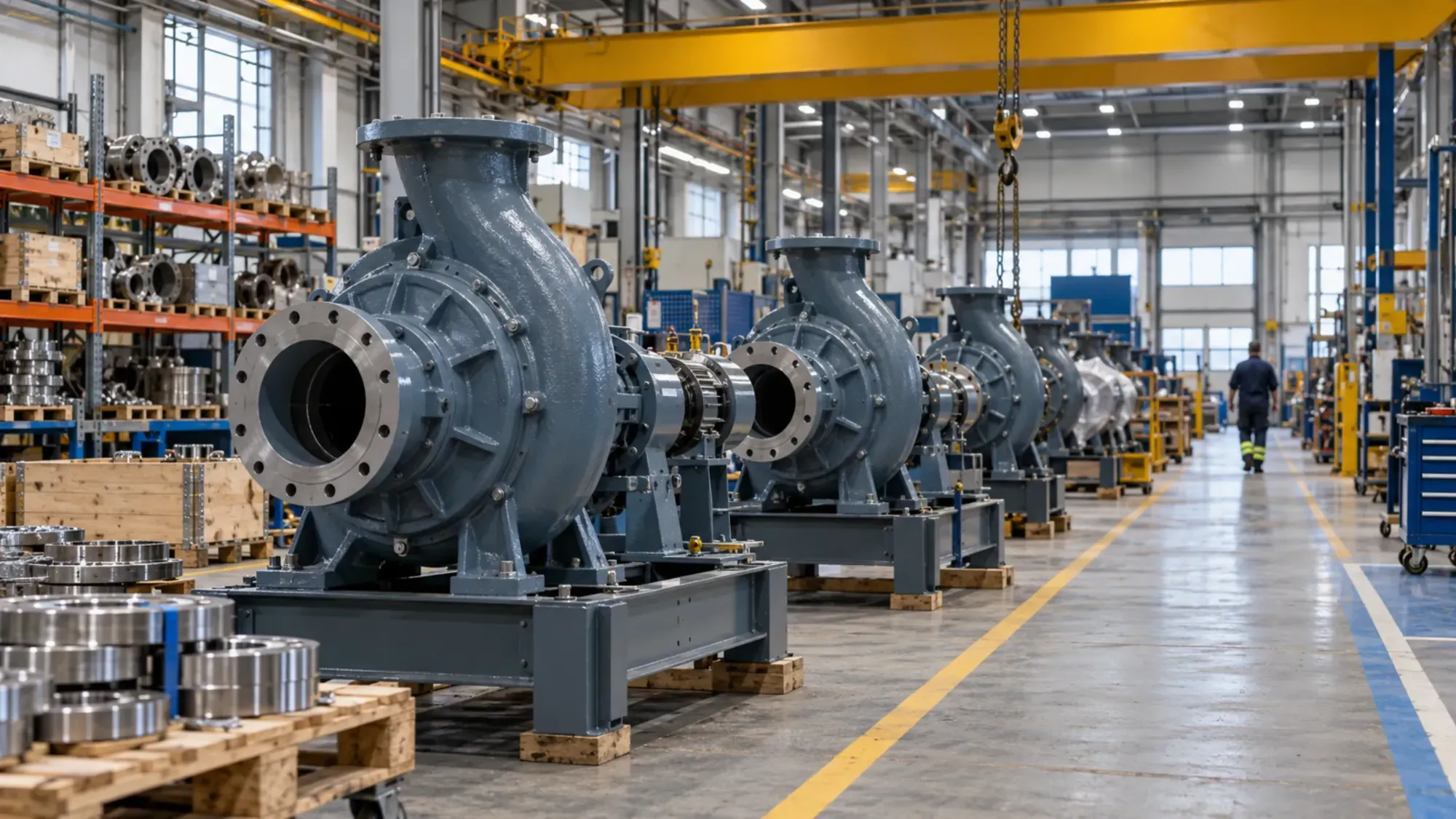
The assembly hall, Västerås
2025
A pump manufacturer in Västerås
640 people, third generation
Why is our margin falling while sales grow?
Situation
Sales grew 14% in two years, mostly through new distributors in Germany and Poland. EBITA margin fell from 9.4% to 8.2% over the same years, and the board’s first guess was the price of steel.
What we found
Steel was a small part of it. List prices had gone up three times since 2021, but net prices hadn’t moved: discounts were set by each salesperson and never reviewed, and orders under €2,000 were priced like pallet orders.
What changed
One discount table for the company, signed off each month; a small-order surcharge; new freight terms for the 40 smallest accounts. Margin was 11.3% fourteen months later, with sales still growing.
Exhibit 1Percentage points of sales
EBITA margin bridge, 2023 to 2025
Source: client ERP and price records, 2023–2025; Kvist analysis
Two-thirds of the recovery came from charging, consistently, for what was already being delivered.
The assembly hall, Västerås
2024
A packaging group in Borås
1,100 people, three plants
Should we build the second plant?
Situation
The order book was full into the next year. The five-year plan had a €38 million second plant in it, and the board held an option on a site outside Jönköping.
What we found
The demand was real, but the capacity was already in the building. Most of the main plant’s lost time was changeovers between print jobs: 95 minutes on average, scheduled by whoever was on shift.
What changed
A changeover programme on the two bottleneck lines (standard kits, a fixed sequence and one scheduler who owns the week) and a third shift on one line. Output rose 23% in six months. The site option was let go; the board will look at it again in 2027.
Exhibit 2Tonnes a week
Weekly output at the main plant, 26 weeks
Source: plant production system, weeks 1–26 of 2024; Kvist analysis
23% more output from the same building, and €38 million not spent.

A print line mid-changeover, Borås
2024
A packaging group in Borås
1,100 people, three plants
Should we build the second plant?
Situation
The order book was full into the next year. The five-year plan had a €38 million second plant in it, and the board held an option on a site outside Jönköping.
What we found
The demand was real, but the capacity was already in the building. Most of the main plant’s lost time was changeovers between print jobs: 95 minutes on average, scheduled by whoever was on shift.
What changed
A changeover programme on the two bottleneck lines (standard kits, a fixed sequence and one scheduler who owns the week) and a third shift on one line. Output rose 23% in six months. The site option was let go; the board will look at it again in 2027.
Exhibit 2Tonnes a week
Weekly output at the main plant, 26 weeks
Source: plant production system, weeks 1–26 of 2024; Kvist analysis
23% more output from the same building, and €38 million not spent.
A print line mid-changeover, Borås
2025
A fastener distributor, Nordics and Baltics
€310 million revenue
Is the acquisition worth what we’re paying?
Situation
Terms were agreed in principle to buy a Finnish competitor. The seller’s first ask was €142 million, and the synergy case in the bank’s model rested on shared purchasing.
What we found
The two bought from different suppliers for 70% of their spend, so the purchasing savings were a third of the model’s. The target’s main warehouse needed a roof and racking that had been put off for four years, and three account managers held most of the largest customers.
What changed
Our client bought the company, at €116 million, with retention agreements for the three account managers signed before closing and an integration lead named for day one.
Exhibit 3Enterprise value, € million
What the company was worth, four ways
Source: target accounts 2020–2024, comparable Nordic deals 2019–2025; Kvist analysis
The agreed price sits inside every method. The first ask sat outside all of them.

The main warehouse aisle, Vantaa
2025
A fastener distributor, Nordics and Baltics
€310 million revenue
Is the acquisition worth what we’re paying?
Situation
Terms were agreed in principle to buy a Finnish competitor. The seller’s first ask was €142 million, and the synergy case in the bank’s model rested on shared purchasing.
What we found
The two bought from different suppliers for 70% of their spend, so the purchasing savings were a third of the model’s. The target’s main warehouse needed a roof and racking that had been put off for four years, and three account managers held most of the largest customers.
What changed
Our client bought the company, at €116 million, with retention agreements for the three account managers signed before closing and an integration lead named for day one.
Exhibit 3Enterprise value, € million
What the company was worth, four ways
Source: target accounts 2020–2024, comparable Nordic deals 2019–2025; Kvist analysis
The agreed price sits inside every method. The first ask sat outside all of them.
The main warehouse aisle, Vantaa
Other engagements
Year
Client
The question
Practice
2026
A foundry group with two sites in Småland
Which of our two foundries do we keep?
Operations and footprint
2025
A maker of agricultural trailers
Why does every launch slip by a quarter?
Product development
2025
A family-owned maker of bakery equipment
Should the next generation sell?
Deals and capital
2024
A Norwegian marine-electronics company
Can we price service apart from the product?
Pricing and commercial
2024
A timber-frame house builder
How many models should we offer?
Product development
2023
A distributor of hydraulic parts
Do we need our own warehouse in Poland?
Operations and footprint
What we put in the engagement letter.
Five clauses that are in every letter we sign. They answer most of what people ask us in the first meeting.
What we put in the engagement letter.
Five clauses that are in every letter we sign. They answer most of what people ask us in the first meeting.
§ 1
One question per engagement.
We agree it in one sentence before we start, and the answer is judged against that sentence, not against a list of deliverables.
§ 1
One question per engagement.
We agree it in one sentence before we start, and the answer is judged against that sentence, not against a list of deliverables.
§ 2
The partner you meet does the work.
There are four of us and no associates. The person in the first meeting is the person on your shop floor in week two.
§ 2
The partner you meet does the work.
There are four of us and no associates. The person in the first meeting is the person on your shop floor in week two.
§ 3
The answer fits in fifteen pages.
With an appendix that holds every number and how we got it, so your own people can check it and run it again next year.
§ 3
The answer fits in fifteen pages.
With an appendix that holds every number and how we got it, so your own people can check it and run it again next year.
§ 4
The fee is fixed before we start.
If the work takes longer than we planned, that is our problem, not an invoice.
§ 4
The fee is fixed before we start.
If the work takes longer than we planned, that is our problem, not an invoice.
§ 5
We leave.
Every engagement has an end date. We don’t sell you the next one in the last meeting.
§ 5
We leave.
Every engagement has an end date. We don’t sell you the next one in the last meeting.
Three ways to engage
Fees excluding VAT
Diagnostic
6 weeks
One question, answered in writing, with the analysis behind it and a plan for the first 90 days.
€48,000
fixed
Diagnostic
6 weeks
€48,000
fixed
One question, answered in writing, with the analysis behind it and a plan for the first 90 days.
Implementation
3 to 9 months
One partner, two or three days a week, inside your team while the answer is put to work.
€26,000
a month, from
Implementation
3 to 9 months
€26,000
a month, from
One partner, two or three days a week, inside your team while the answer is put to work.
Board seat
12 months
One partner on your board or advisory board, with four working days a quarter between meetings.
€5,500
a month
Board seat
12 months
€5,500
a month
One partner on your board or advisory board, with four working days a quarter between meetings.
Travel in the Nordics and the Baltics is included. Most clients start with a diagnostic; about half go on to implementation.
Four partners. No associates.
Each of us ran something before we advised anyone. Between us: two plants, a pricing team, a product organisation and a bank’s industrial deals desk.
Four partners. No associates.
Each of us ran something before we advised anyone. Between us: two plants, a pricing team, a product organisation and a bank’s industrial deals desk.

Operations and footprint
Twelve years in plants: production manager in Sandviken, then COO of a pump and valve group with sites in four countries.
Always asks
“Where does the work wait?”
Operations and footprint
Twelve years in plants: production manager in Sandviken, then COO of a pump and valve group with sites in four countries.
Always asks
“Where does the work wait?”

Pricing and commercial
Head of pricing at a steel distributor for eight years; before that, a strategy consultant in Stockholm who got tired of leaving at the good part.
Always asks
“What did the customer actually pay?”
Pricing and commercial
Head of pricing at a steel distributor for eight years; before that, a strategy consultant in Stockholm who got tired of leaving at the good part.
Always asks
“What did the customer actually pay?”

Product development
A mechanical engineer who ran product development at a truck-components supplier, from 40 engineers to 160.
Always asks
“Who is allowed to change the date?”
Product development
A mechanical engineer who ran product development at a truck-components supplier, from 40 engineers to 160.
Always asks
“Who is allowed to change the date?”
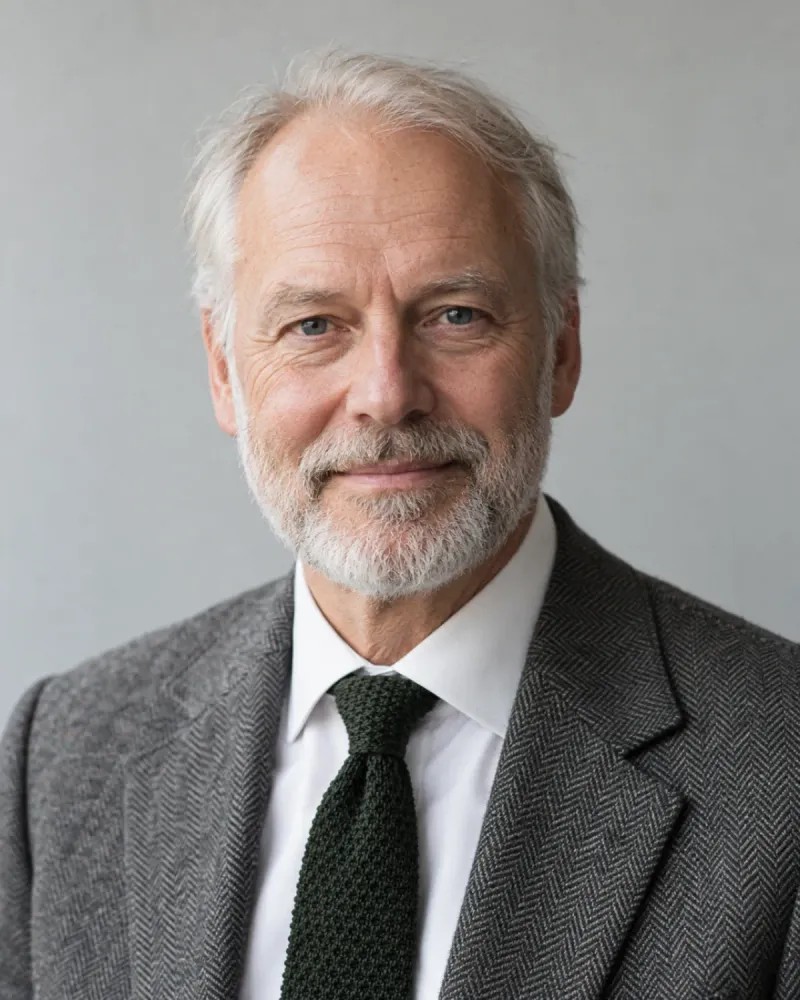
Deals and capital
Eleven years on a Nordic bank’s industrial deals desk, then CFO of a family-owned engineering group through two acquisitions.
Always asks
“What does the order book actually say?”
Deals and capital
Eleven years on a Nordic bank’s industrial deals desk, then CFO of a family-owned engineering group through two acquisitions.
Always asks
“What does the order book actually say?”
We take on four engagements at a time, one each. When we’re full, we say so: the next start date is 12 January 2027.
Notes.
Short pieces on questions we keep being asked. Written by the partners, a few times a year.
Notes.
Short pieces on questions we keep being asked. Written by the partners, a few times a year.
Bring the question.
Write it the way you’d say it to your board. It doesn’t need to be polished; taking it apart is our job.
Bring the question.
Write it the way you’d say it to your board. It doesn’t need to be polished; taking it apart is our job.
1
A partner reads it, not an inbox.
2
We reply within two working days.
3
A 45-minute call, under NDA if you want one.
4
A written proposal with a fixed fee within a week.